


Looking for Office Space? Don’t Overlook the Latest EPC and MEES Changes
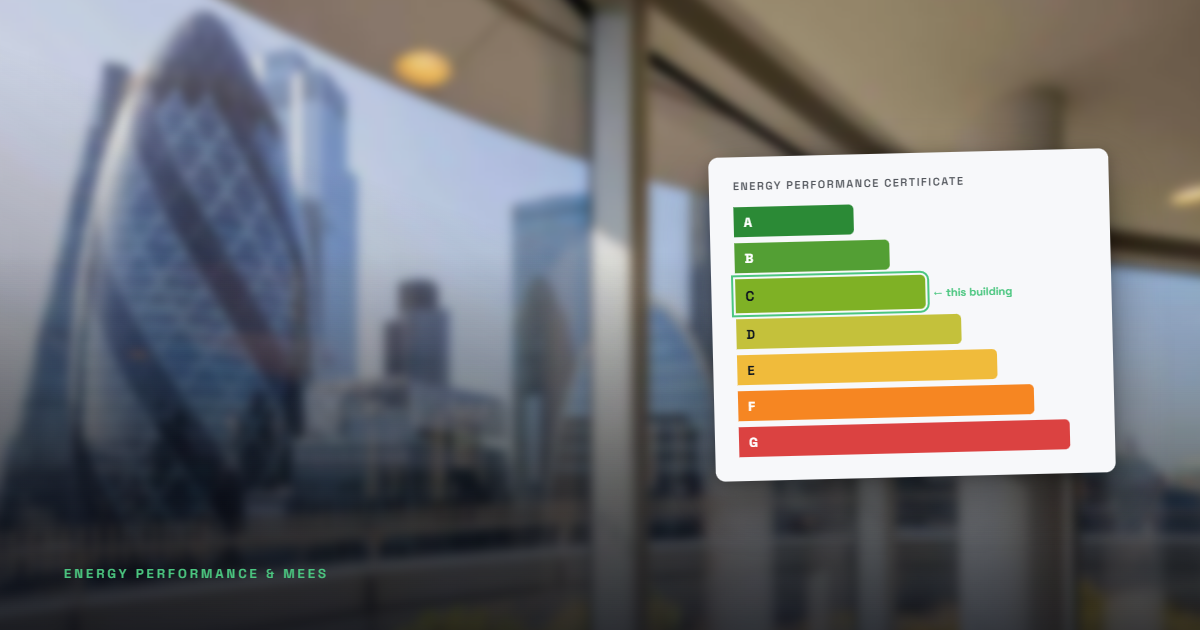
If you’re searching for office space in London right now, there’s a regulatory shift happening in the background that could affect your lease far more than most tenants realise. It’s worth understanding before you sign anything.
A quick recap of the rules
Since 2018, landlords have been barred from granting new leases on commercial buildings rated F or G on their Energy Performance Certificate (EPC). Since 2023, that ban extended to existing tenancies too, meaning a landlord can no longer simply let a poorly-rated building continue as-is. As of this year, the Government has also proposed requiring EPC information to be available at an earlier stage in the marketing process, bringing energy performance considerations further forward in leasing decisions.
What’s new in 2026
In June, the government stated its intention that from 2031, any commercial building over 1,000 square metres will need to reach at least an EPC B rating. Smaller buildings are expected to remain subject to the current E-rating requirement. Notably, an earlier proposal to introduce an interim C-rating requirement by 2027 has been dropped, so the Government’s intended direction of travel is clearer, but the runway to get there is now longer and simpler than many expected although future standards could be tightened over time. Secondary legislation is still needed to make it official, so some detail may yet shift.
Enforcement is already active rather than theoretical. Financial penalties can reach £150,000 per breach, and landlords found to be non-compliant may also be publicly named. Several London boroughs, including Westminster, Camden and Tower Hamlets, have been active in enforcing the regulations.
Why this matters if you’re the tenant, not the landlord
It’s easy to assume this is a landlord problem. It isn’t, entirely. If you’re about to sign a 10-15 year lease, consider:
- Operational disruption. Landlords may need to undertake significant improvement works during your lease term, potentially causing disruption to occupation and building operations.
- Cost pass-through. Retrofit and upgrade costs are sometimes recovered through service charges, meaning tenants can end up funding compliance work indirectly. Understanding whether these costs can be recovered through the service charge is an important part of lease negotiations.
- Your own ESG commitments. Many businesses now report on the sustainability of their own premises. Leasing space in a building with a weak energy rating and no upgrade plan can work against your own targets.
- Future leasing flexibility. Buildings with poor EPC credentials may become less attractive to future occupiers, which can affect assignment, subletting and wider exit strategies.
This is part of a broader “flight to quality” already visible in the London market, where occupiers are increasingly favouring newer, higher-rated buildings, sometimes at a rent premium, over cheaper but less compliant stock.
How the right advice helps
This is exactly the kind of detail that’s easy to miss when you’re focused on rent, location and floor plates. Before you shortlist a building, it’s worth knowing:
- Its current EPC rating, how and when it was assessed. For example, when an EPC expires, the rating may fall due to changing legislation.
- Whether the landlord has a stated, funded plan to reach future compliance
- Whether any lease clauses would pass upgrade costs on to you
- Whether the building is relying on a compliance exemption rather than genuine upgrades
At Metric, we believe occupiers should understand the full picture before committing to a building. That means looking beyond rent and incentives to consider future compliance obligations, operational costs and potential capital expenditure. As regulations continue to evolve, understanding a building’s EPC position today could help avoid costly surprises tomorrow.